
Which Premier League Clubs Have Produced the Most World Cup Players?


BetMGM Sports Welcome Offer Ts and Cs: Gambling problem? Call 1-800-GAMBLER or 1-800-MY-RESET (Available in the US) Call 877-8-HOPENY or text HOPENY (467369) (NY) Call 1-800-327-5050 (MA), 1-800-BETS-OFF (IA), 1-800-981-0023 (PR), Call 1-800-NEXT-STEP (AZ), 1-800-522-4700 (KS, NV), 1-800-270-7117 for confidential help (MI). 21+ only. Please Gamble Responsibly. See http://BetMGM.com for Terms. First Bet Offer for new customers only (if applicable). Subject to eligibility requirements. Bonus bets are non-withdrawable and Expire in 7 Days. In partnership with Kansas Crossing Casino and Hotel. This promotional offer is not available in DC, Mississippi, New York, Nevada, Ontario, or Puerto Rico.
The 2026 World Cup will be the biggest in the tournament's history - 48 nations, 104 matches across 16 cities in the United States, Canada and Mexico. And once again, the Premier League will be the single-largest supplier of players to the competition. Something to keep in mind at football betting sites as the tournament approaches.
An estimated 158 top-flight players could feature this summer, continuing a trend that has accelerated sharply since the Premier League's inception in the early 1990s. But which PL clubs have consistently sent the most players to the World Cup over the past three decades? And which have produced players who actually went on to lift the trophy?
We tracked every Premier League (and First Division) club's World Cup representation across the last 10 tournaments - from Italia '90 through to the expanded 2026 edition - and scored their success using a weighted points system. Here's what the data reveals.
How We Ranked 25 Premier League Clubs Across 10 World Cups
Our analysis covers 25 clubs that have spent meaningful time in the English top flight since 1990. For each of the 10 tournaments in that span, we counted how many players registered to each top-flight club were selected in final World Cup squads. The data draws from official PremierLeague.com squad breakdowns (which exist for 2018, 2022 and 2026), FIFA's published squad lists, Statista's statistical records and supporting coverage from CBS Sports, FourFourTwo and Goal.com.
We ranked clubs in three ways. The first is a straightforward cumulative total of World Cup players across all 10 tournaments - a measure of sustained international depth. The second isolates the 2026 projections, based on current PL squads and nations that have already qualified, offering a snapshot of where power sits right now. The third applies a composite World Cup Success Score, which goes beyond volume to measure actual tournament achievement.
THE PREMIER LEAGUE'S WORLD CUP FACTORY
Which English top-flight clubs have sent the most players to the World Cup across the last 36 years — and how the power balance has shifted.
The World Cup Success Score: Our Methodology
Raw player counts tell you about squad depth, but not about glory. A club that sends 16 players who all bow out in the group stage earns the same ranking as one whose lone representative lifts the trophy. Our Success Score addresses that imbalance.
The formula weights tournament achievement by the players at each club:
- 10 points for each player on a World Cup-winning squad
- 5 points for each player who reached the final on the losing side
- 3 points for each player who reached the semi-finals but not the final
- 1 point for each World Cup goal scored
Crucially, all achievements are counted only whilst a player was registered at that specific Premier League club. Paul Pogba's 2018 winners' medal counts for Manchester United, where he was playing at the time. Alexis Mac Allister's 2022 triumph counts for Brighton, where he was registered before his move to Liverpool. Emiliano Martinez's heroics in Qatar count for Aston Villa. This approach ensures the score reflects what each club's squad actually delivered on the world stage, not what players achieved after leaving.
Key Findings: The Volume Rankings
Manchester United lead on cumulative total but are clearly declining: With 112 World Cup players across the last 10 tournaments, United sit comfortably top. The Sir Alex Ferguson era drove consistently double-digit representation from 1998 through to 2014, peaking at 14 players for both Brazil 2014 and Qatar 2022. But the trajectory is moving the wrong way - just nine players are projected for 2026, their lowest since Italia '90 when they were First Division also-rans.
Manchester City's rise is the steepest in Premier League history: City had just one player at the 1994 World Cup in the US. By 2018 and 2022, they topped the entire league with 16 apiece - more than any other club in English football. The Abu Dhabi-era investment, mapped in World Cup terms, is extraordinary.
Arsenal peaked first: Arsene Wenger's global scouting network delivered 15 Arsenal players to the 2002 World Cup in Korea and Japan - the joint-highest by any PL club that decade. Long before the mega-money era transformed squad building, Wenger was the original international recruiter.
Bournemouth's transformation defies belief: They had zero World Cup players as recently as Russia 2018. For 2026, they will likely have players representing 10 different qualified nations - the widest national diversity of any Premier League club. That leap, from nothing to the most globally diverse squad in the top flight is perhaps the most striking individual story in the data.
Nottingham Forest vanished and came back: Forest supplied World Cup players through the early 1990s, then had zero representation for five consecutive tournaments from 2002 to 2018 as they fell away from the Premier League. Their revival has been sharp - five players at Qatar 2022 and eight projected for 2026.
There are several betting sites that we recommend to back our football betting tips and they are all trusted sports betting apps.
Key Findings: The Success Rankings
Chelsea and Arsenal lead on World Cup glory: Both clubs have had five players win World Cup winners' medals whilst on their books. For Arsenal, that includes Patrick Vieira and Emmanuel Petit with France in 1998, Cesc Fabregas with Spain in 2010 and Mesut Ozil, Lukas Podolski and Per Mertesacker with Germany in 2014. For Chelsea, Marcel Desailly, Frank Leboeuf (France '98) N'Golo Kante and Olivier Giroud (France '18) headline the list.
Tottenham benefit from Harry Kane's Golden Boot: Spurs rank highly on the Success Score thanks to Kane's six goals at Russia 2018, Hugo Lloris captaining France to glory in 2018 and multiple England players reaching the semi-finals that year. Goals and deep runs add up.
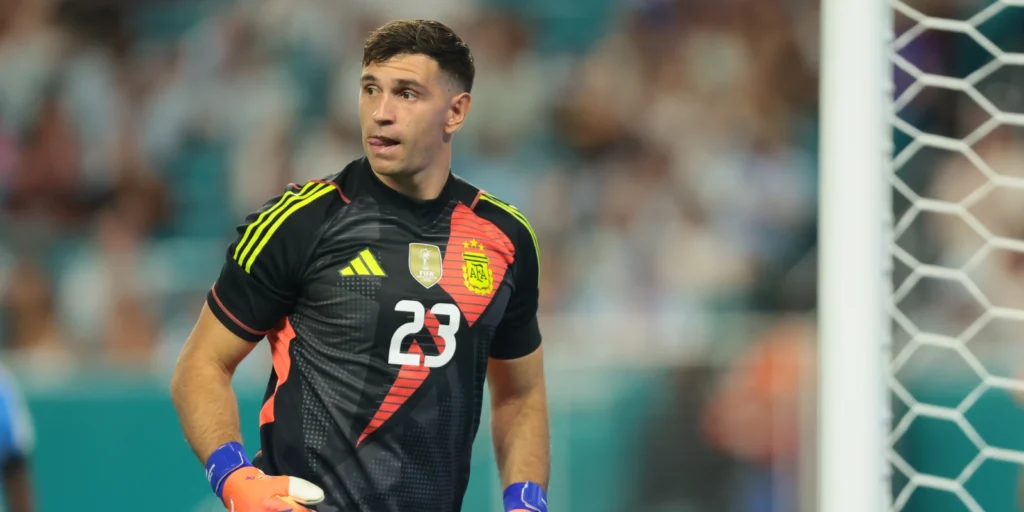
Aston Villa owe everything to one man: Emiliano Martinez's Golden Glove-winning, penalty-saving performance for Argentina in Qatar 2022 delivered Villa a World Cup winner - a remarkable return for a club that had just one World Cup player four years earlier.
Brighton punched above their weight: Mac Allister scored in the 2022 final and won the World Cup whilst still registered at the Amex. For a club that had never had a World Cup player before 2018, that is an astonishing achievement.
The Premier League's Growing Global Influence
The broader trend is unmistakable. The English top flight (the Premier League came into existence in 1992) supplied an estimated 68 World Cup players in 1990. By 2022, that figure had doubled to 136. For 2026, with the expanded 48-team format, it is projected to reach 158. No other domestic league in world football comes close.
That growth mirrors the league's commercial explosion - rising broadcast revenues, global fanbases and the financial muscle to attract the best international talent. The World Cup has effectively become a Premier League showcase, and the clubs that invest most heavily in global scouting tend to reap the rewards.
What This Means for 2026 World Cup Betting
Understanding which clubs supply World Cup players - and how successful those players have been at the tournament - provides a genuinely useful framework for summer betting. Clubs that consistently develop or attract international-calibre talent tend to produce players who perform when it matters most.
With group-stage fixtures already confirmed, tracking Premier League representation by club offers an additional angle when assessing squad strength, identifying potential Golden Boot contenders, and evaluating which nations have the deepest pools of proven top-flight talent. The data is clear: the Premier League's influence on the World Cup has never been greater.
The trusted betting sites have invested heavily in having the best football betting apps available. The better the app, the more quickly you will be able to place football bets.
About the Author
 Best Canadian Online Crypto Casino Bonuses and Promo Codes September 2026
  New Crypto Casinos India & Best Bitcoin Casino Sites & Apps For September 2026
  No Deposit Casino Bonus Offers In The UK For September 2026
  Ladbrokes Online Casino Bonus September 2026: Get 100 Free Spins!
  BOYLE Casino Deposit Free Spins September 2026: Claim 100 Free Spins
  Today's Horse Racing Betting Tips - Expert Picks For Saturday 16th May
Comments